
Exclusive Essay with TRWPlays author Tyler Dwiggins

Tyler Dwiggins writes about his most personal play yet, THE BINDING, in his essay about how he came to write this story and the importance of LGBTQ+ representation in theatre and film. He calls this play “The Gay Pixar Play”.

The Gay Pixar Play

By Tyler Dwiggins

“Do we really need another ‘coming out’ story?” This phrase gets thrown around more often than it should, and I’ve never understood it. We live in an entertainment ecosystem that can support six thousand superhero movies a year. Are there really that many “coming out” stories clogging up our stages and screens?

Still, it was a phrase that bounced around my brain as I began writing my play The Binding. The first scene I wrote was that of Isaac—a closeted religious teen—asking his mother – a youth pastor—about a Bible story in which a father almost sacrifices his own son on an altar to prove his love for God. I saw that Bible story as a metaphor for religious parents who sacrifice their own relationships with their queer children after they come out.

But, I asked myself the familiar question. “Do we really need another ‘coming out’ story?”

And the truth was, I didn’t want to write a basic “coming out” play. I wanted to write something whimsical — with stage magic and literal flights of fancy. I wanted to create a play about queer characters that felt as imaginative and big-hearted as movies like Inside Out or Monsters, Inc. And that is how The Binding became what I lovingly referred to as “the gay Pixar play.”

I decided to pair Isaac’s struggle with his sexual identity and his religious upbringing with the sudden re-appearance of Poppy – Isaac’s childhood Imaginary Friend. Poppy flies into the living room window on the night of Isaac’s sixteenth birthday, and (although Isaac doesn’t know this) she is determined to push Isaac out of the closet one way or another. And Isaac definitely doesn’t know that Poppy has been forbidden to return to her Assigned Child’s home — by her own employers, the Federal Bureau of Imaginary Companionship.

With this, the play found its two worlds: a small Midwestern town and the other magical world, that of the Imaginary Friends. Like Inside Out or Monsters, Inc., we would see how these worlds butt up against each other – and how a sparkling outsider can interrupt the stasis of the ordinary world. And so, the idea of a teenager dealing with the unannounced return of his Imaginary Friend was the getaway car I needed — so that no one would realize I’d really written a “coming out” story!

The core message of The Binding is about the power (and danger) of placing your faith in something you cannot see. The characters in The Binding desperately want something to believe in, so they can survive life’s hardships and the universe’s cruel ambivalence. Whether it’s God or an Imaginary Friend or the cute boy who just moved into the neighborhood, Isaac HAS to find someone—or something– to believe in.

The Binding is my most personal play yet—but not because the characters are necessarily based directly on me. I was not really an Isaac, although he has pieces of my history in his life. And I was not his bold love interest Trevor, even though Trevor has more of my personal philosophies and sense of humor.

The reason The Binding is so personal is not because the plot is autobiographical, but because it represents the core of what I want to put into the world as a writer. I am a playwright who believes that queer characters deserve to inhabit fantastical, romantic, hilarious, heartbreaking, dimensional stories. LGBTQ+ folks have so much more to offer than rote tragedy or bitchy one-liners. We deserve to see ourselves in whimsical fairy tales and religious allegories and teen dramas and any other stories you can imagine… Maybe even one of those six thousand superhero movies!

And we deserve to see “coming out” stories. Especially weird ones like The Binding. Because every one of those stories is as unique and personal as the magical human telling it.

Read Tyler Dwiggins Bio

Q&A with New TRWPlays Author, Carla Ching

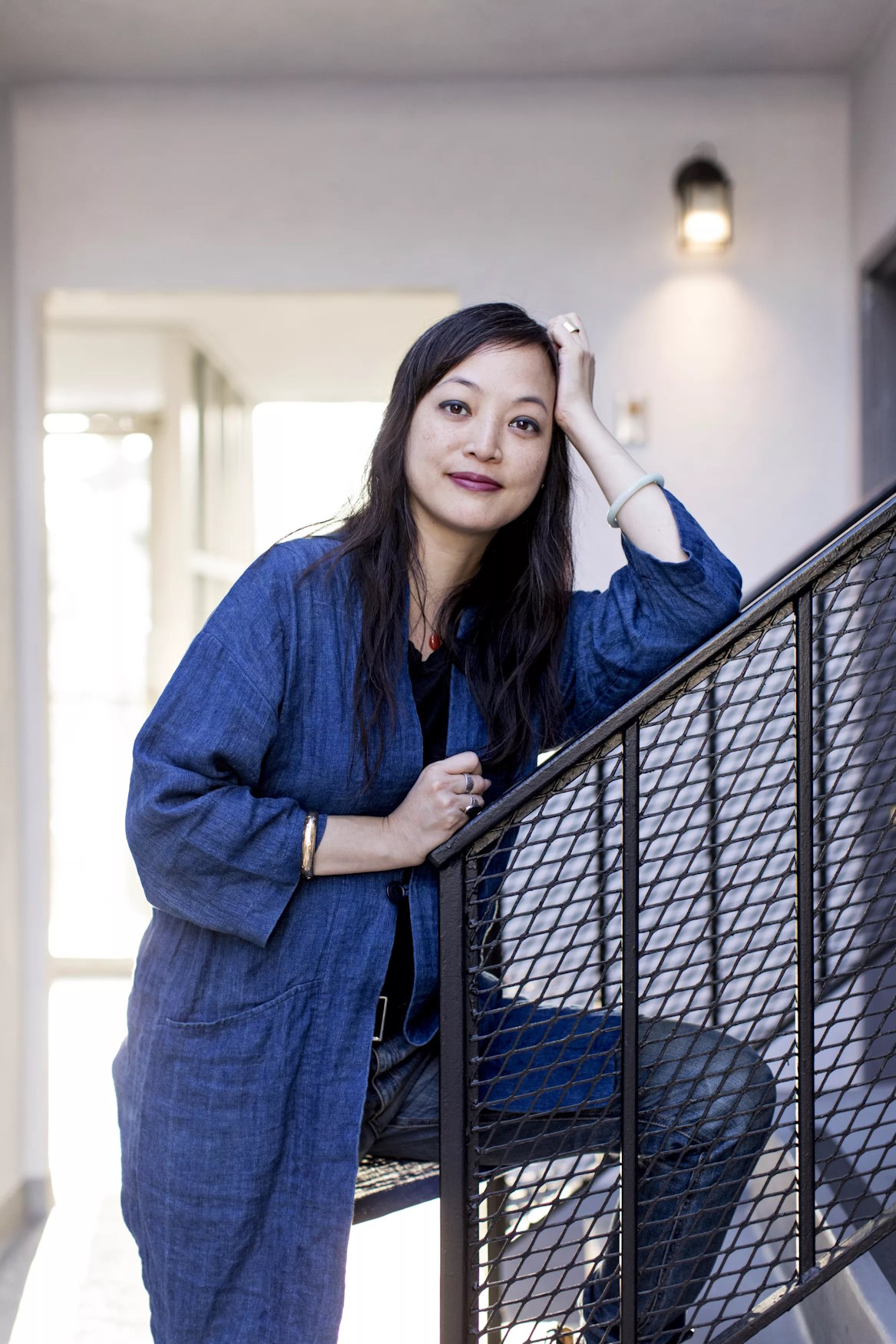
In this exclusive Q&A with the author of Nomad Motel and The Two Kids That Blow Shit Up, Carla Ching, was kind enough to share some time with TRW’s Katie Stottlemire, and offered a revealing, candid and insightful look into her work.

…poets, theatermakers, writers and artists aren’t our prophets and seers anymore. Maybe they could and should be.”

– Carla Ching

KATIE: Your plays NOMAD MOTEL and THE TWO KIDS THAT BLOW SHIT UP are different in plot and circumstance but explore similar themes. Both plays present complex family relationships and stories of love. In TWO KIDS, we watch a tumultuous relationship that spans over thirty years and in NOMAD MOTEL, we witness two unique family structures and complex feelings of love. How do you approach writing on family and love?

CARLA: I think F. Scott Fitzgerald said that we return to the same themes again and again because they’re the themes/images/characters that haunt us. That keep us up at night. That move us. So I suppose these are the things I return to. Before I start a play, I may think about a burning question that’s bothering me. I kick around that question for a little while and ask myself if it’s worth spending time for the 2-5 years it’s gonna take to work on the play. Will I get sick of it? Or is there something that I’ve got to answer for myself in the writing of the play and the Rubix Cube of working on that will get me through to production. Then, I’ll sort of put that away and start with the characters I want to work with. And then, I really drop two characters into a room and watch them until they start to talk to one another. And I record what they’re saying. And let them do what they will. Even when I don’t want them to do that. And then the rest of the play starts to reveal itself in unconscious way. I don’t force theme on it or anything, but let the characters lead. I’m coming back around, I promise. For Nomad, I think I was asking what we do when the family we were born into can’t give us what we need — because they simply can’t. How do we find home? How do we continually re-make it as people are torn away from us? How do we find resilience in the face of great adversity? For Two Kids, I think it was almost the opposite question — what do we do when we’re stuck with someone? When the only person in the world that really understands us also makes us so mad? And messes up our lives? Or lets us down? How do you see someone through a whole life? What does it mean to be friends (or more sometimes and less other times) for three decades? Why are there people we just can’t shake, though we try?

KATIE: Right. “How do you see someone through a whole life?” That’s key. NOMAD MOTEL focuses on a facet of that heavy reality for many people: the complete and total uprooting of one’s life. The play explores how that situation manifests differently for each character, and the numbed acceptance and buried pain is palpable. How did you first come to the inspiration to write this story?

CARLA: There is a little bit in this story that comes from a particularly nomadic experience in New York when my marriage broke up. But, I was also commissioned to write this play by South Coast Rep through their Crossroads Commissioning Program. I was supposed to write a story about Orange County in some way. I wanted to touch on corners of the OC that hadn’t been explored as much. And I came across some articles about parachute kids — children who come to the US to live on their own and go to school as their parents stay in their home country. I also watched an HBO documentary called “Homeless: The Motel Kids of Orange County.” I was intrigued about both of these worlds. And saw parallels and contrasts between them. I also started getting some help from Pier Carlo Talenti, as I was starting work with the CTG Writers Group. They have a salon at the beginning of your time there where you could get two specialists to come in and have a conversation for an hour. He found an Asian American filmmaker named Angela Chen who had made a film about parachute kids. And Jennifer Friend, the CEO of Project Hope Alliance, which does work with housing unstable children and families in Orange County. That hour long salon was moving and super informative and influenced the characters that would become Alix and Mason, and their relationship.

KATIE: That connection really shows in the play. I wanted to talk about that in relationship to both pieces featuring racial themes, with a specific focus on Asian Americans. TWO KIDS presents ideas of racial stereotypes in nuanced layers, while NOMAD MOTEL unpacks those nuanced layers in tangible ways. Do you believe one way is more effective at presenting themes of racial stereotypes and oppressions, or is it situational?

CARLA: I write about what I experience moving through the world as an Asian American person. I think what may be different about these two plays is that Diana and Max are both Asian American, so they don’t have to code switch for each other as much. They have an almost insider language they share. Whereas Mason has to translate his experiences (as an undocumented Asian kid trying to pass for Asian American so that he doesn’t get deported) for his father in Hong Kong, and for Alix who has a completely different class experience and racial background. My hope is to put as many varied Asian American characters and stories onstage as I can. And that the characters have a multiplicity of experiences, and many facets. To illuminate for others what it’s like to walk in some of our shoes. And to make us more dimensional and more human in order to make it harder for others to stereotype us, dismiss us, or sideline us. And for the AA community — I think I write these plays because I didn’t see myself on stage or film growing up. It’s painful and hard not to see yourself represented in popular or even fringe culture. Your dreams, your worries, your family, your passions, your gripes with the world. So I write these for us. Stories where we’re at the center. Where we’re not the side character in someone else’s narrative.

KATIE: For you, what does it mean to be a playwright?

CARLA: To me, to be a playwright is to capture some kind of aspect of the human experience and put it onstage. Then to ask people to interrogate what they think they know, feel, understand. To unearth some truths, to dispel some lies. To reckon with the hardest questions we have. There’s nothing like wrestling with a question with a whole room full of other people. To go on a journey in the dark together. I’m sad we’re in a time when our poets, theatermakers, writers and artists aren’t our prophets and seers anymore. Maybe they could and should be. Maybe because more populist forms and platforms are more accessible to people. Maybe if we improve access, theater can once again truly be a place where we dialogue about the world we live in, the families we love in, the existential questions that keep us up at night.

Read Carla Ching’s Bio

NOMAD MOTEL

THE TWO KIDS WHO BLOW SHIT UP

Article by Katie Stottlemire